|
|
|
|
KING'S PATTERN FLATWARE
AND
CATLERY
SERVICE - GREAT BRITAIN 1815 - 2008
SERVIZIO DI POSATE MODELLO "KING'S" - GRAN BRETAGNA 1815 - 2008
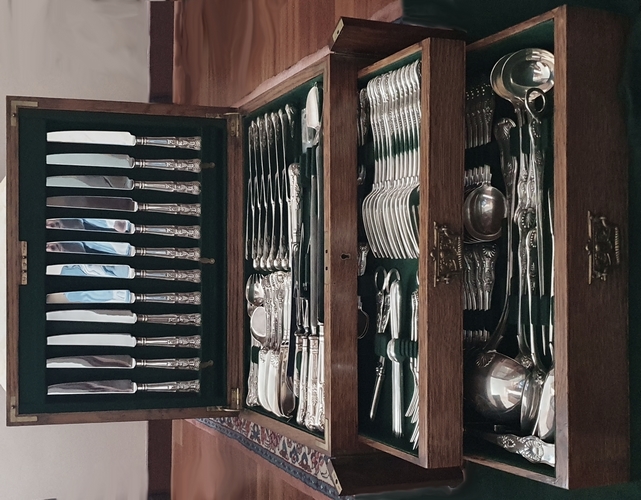
Double-struck King's pattern cutlery/flatware set for 12 settings, mainly in the “Honeysuckle” variant with some pieces in the “Hourglass” and “Bastard King's” variants (typically Scottish single struck). All pieces, cutlery aside, were mainly manufactured in the Victorian period, with Georgian (from 1815), Willam IV, Edwardian, George V, and Elizabeth II examples. Are represented the major silversmiths of the period, including George William Adams (main silversmith), Francis Higgins, William Eaton, Elizabeth Eaton, William Chawner, Mary Chawner, William Bateman, George Jackson & David Fullerton, Henry Holland. The origin is mainly London and to a lesser extent Sheffield and Birmingham. There are a couple of rarities, including an English colonial Victorian fork (Calcutta, India) and a Victorian fish fork made in Glasgow. The table cutlery was mainly made in Sheffield and the early 2000s (except the carving service which dates back to 1963). The service is stored in an oak wood container, fitted with a key, with flap and drawers, dating back to the early 1900s. The fish, tea, and dessert services are contained in an oak cutlery cabinet of Provençal origin, dating back to around 1930. The total number of pieces is 180. The total weight is 11.63 kg, of which 10.5 kg of 925/1000 silver. The composition of the service is shown in the table below. Click on the number of pieces in the table below to see the images Click on the image above for an overview
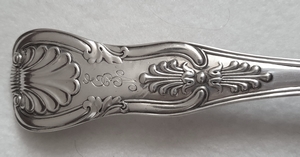
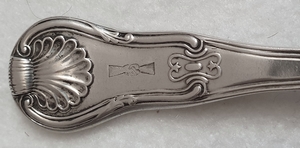
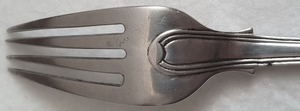
History and main variants of the King's pattern The King’s pattern was introduced in the early 19th century and is the most popular among the Regency patterns. It was based on an 18th-century French design. The shape started out as the "Hourglass" pattern and then quickly developed into the much popular "Honeysuckle". Shell design to the anterior surface of handle terminal is concave, shell design to the posterior surface of handle terminal is convex. The heels are usually composed of a shell with two different motives at the junction with the stem: a curved line in the "union" variant or a rhomboidal device called "diamond". Usually, the pattern is struck on both sides of the flatware ("double struck"). The variant struck on the front only ("single struck"), is common in pieces made in Scotland. See below for the images of main variants
DESCRIZIONE IN ITALIANO
Servizio di posate da 12 persone di modello “King's” a doppia incisione, prevalentemente nella variante “Honeysuckle” (Caprifoglio) con alcuni pezzi nella variante “Hourglass” (Clessidra) e “Bastard Kings” (variante tipicamente scozzese a singola incisione). I pezzi, coltelleria a parte, sono principalmente centrati nel periodo vittoriano, ma con esempi georgiani (dal 1815), Guglielmo IV, Edoardo VII, Giorgio V ed Elisabetta II. Sono rappresentati i maggiori argentieri del periodo, tra cui George William Adams (principale argentiere), Francis Higgins, William Eaton, Elizabeth Eaton, William Chawner, Mary Chawner, William Bateman, George Jackson & David Fullerton, Henry Holland. La provenienza è principalmente Londra e in numero minore Sheffield e Birmingham. Sono comprese alcune rarità tra cui un pezzo vittoriano coloniale inglese (Calcutta, India) ed un forchettone per pesce vittoriano realizzato a Glasgow. La coltelleria da tavola è stata realizzata principalmente a Sheffield ei primi anni 2000 (tranne il servizio da carne che risale al 1963). Il servizio è contenuto in un contenitore in legno di rovere munito di chiave, a ribalta e con cassetti, risalente ai primi anni del 1900. I servizi da pesce, tè e dolce sono contenuti in un mobiletto portaposate in rovere di origine provenzale, databile attorno al 1930. Il numero totale di pezzi è 180. Il peso complessivo è di circa 12 kg, di cui 10,8 kg di argento a titolo 925/1000. La composizione del servizio è riportata nella seguente tabella. Nella tabella qui sotto, clicca sul numero dei pezzi per vedere le immagini Clicca sull'immagine sopra per vedere un'anteprima
Storia e più comuni varianti del modello "Kings" Il modello "King's" è stato introdotto all'inizio del XIX secolo ed è il più popolare tra i modelli cosiddetti "Reggenza". Basato su un modello francese del XVIII secolo, con un ornamento a clessidra ("Hourglass") al centro del manico, si è in seguito sviluppato nella più popolare variante "Honeysuckle" (caprifoglio). Il decoro a conchiglia all'estremità anteriore del manico è concavo, mentre quello posteriore è convesso. I "tacchi", vale a a dire la parte della bowl che si appoggia al tavolo, sono solitamente decorati cun un motivo a conchiglia, con due differenti motivi alla giunzione con il manico: una linea curva nella variante "union" o un motivo romboidale che ricorda un brillante, nella variante "diamond". Comunemente il decoro è impresso su entrambi i lati delle posate ("double struck"). La variante impressa sul solo lato anteriore ("single struck") è comune nei pezzi realizzati in Scozia.
|
|||||||||||||||||||||||||||||||||||||||||||||||||||||||||||||||||||||||||||||||||||||||||||||||||||||||||||||||||||||||||||||||||||||||||||||||||||||||||||||||||||||||||||||||||||||||||||||||||||||||||||||||||||||||||||||||||||||||||||||||||||||||||||||||||||||||||||||||||||||||||||||||||||||||||||||||||||||||||||||||||||||||||||||||||||||||||||||||||||||||||||||||||||||||||||||||||||||||||||||||||||||||||||||||||||||||||||||||||||||||||||||||||||||||||||||||||||||||||||||||||||||||||||||||||||||||||||||||||||||||||||||||||||||||||||||||||||||||||||||||||||||||||||||||||||||||||||||||||||||||||||||||||||||||||||||||||||||||||||||||||||||||||||||||||||||||||||||||||||||||
LEGENDA H:
Honeysuckle
- Caprifoglio
|
|||||||||||||||||||||||||||||||||||||||||||||||||||||||||||||||||||||||||||||||||||||||||||||||||||||||||||||||||||||||||||||||||||||||||||||||||||||||||||||||||||||||||||||||||||||||||||||||||||||||||||||||||||||||||||||||||||||||||||||||||||||||||||||||||||||||||||||||||||||||||||||||||||||||||||||||||||||||||||||||||||||||||||||||||||||||||||||||||||||||||||||||||||||||||||||||||||||||||||||||||||||||||||||||||||||||||||||||||||||||||||||||||||||||||||||||||||||||||||||||||||||||||||||||||||||||||||||||||||||||||||||||||||||||||||||||||||||||||||||||||||||||||||||||||||||||||||||||||||||||||||||||||||||||||||||||||||||||||||||||||||||||||||||||||||||||||||||||||||||||